MOSCOW, February 3 — RIA Novosti. A new material that can convert the energy of a chemical reaction into mechanical motion, similar to muscles, has been created by scientists at the IKBFU as part of a research team. The material's ability to contract and expand reversibly will allow it to be used for studying the functioning of muscles (such as the heart or intestinal walls) and creating artificial muscle analogues. The results have been published in Frontiers of Materials Science.
Imitation many of the movements, found in living tissues (such as peristalsis or ciliary motion), presents significant challenges in using classical mechanisms. Muscles are flexible, elastic, and self-regulating actuators that can change their properties during operation, allowing them to create natural and smooth movements.
Mimicking such biomechanics is difficult for rigid mechanical systems, but it is possible using polymeric chemomechanical materials.
| The periodic changes in the geometry of these gels occur due to the occurrence of chemical oscillations in the gel, which affect the properties (hydrophilicity and physical cross-linking density) of the gel's polymer matrix. The driving force behind these changes is the periodic Belousov-Zhabotinsky reaction, which involves a complex series of chemical transformations. In the future, these gels could be used to create soft robotics devices, including biomimetic engines, |
| said Ilya Malfanov, a Senior Researcher at the Center for Applied Nonlinear Dynamics at the Immanuel Kant Baltic Federal University. |
The scientist added that the developed gels demonstrate chemomechanical volume amplitudes of about 60 percent, which is twice as high as those of their counterparts created by foreign colleagues.
|
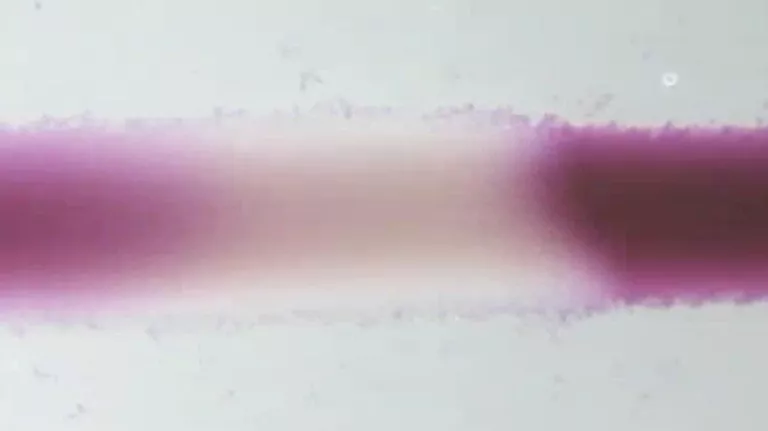
| The peristaltic wave in a new material |
| In our system, during the periodic reaction, the iron complex embedded in the gel is periodically oxidized and reduced, which in turn leads to periodic expansion and contraction of the gel. Malonic acid and sodium bromate act as the "fuel" for such a chemical "muscle", |
| explained Malfanov. |
Разговор о сотрудничестве университета и школ Калининградской области продолжился в аудитории, где ректор Максим Демин и проректор по образовательной деятельности Максим Лисогор рассказали о структуре университета, его образовательной политике и возможностях для школьников. Владимир Родионов, директор центра по работе с образовательными учреждениями БФУ им. И. Канта, презентовал директорам школ предложения университета по развитию профориентационной деятельности.
|
|
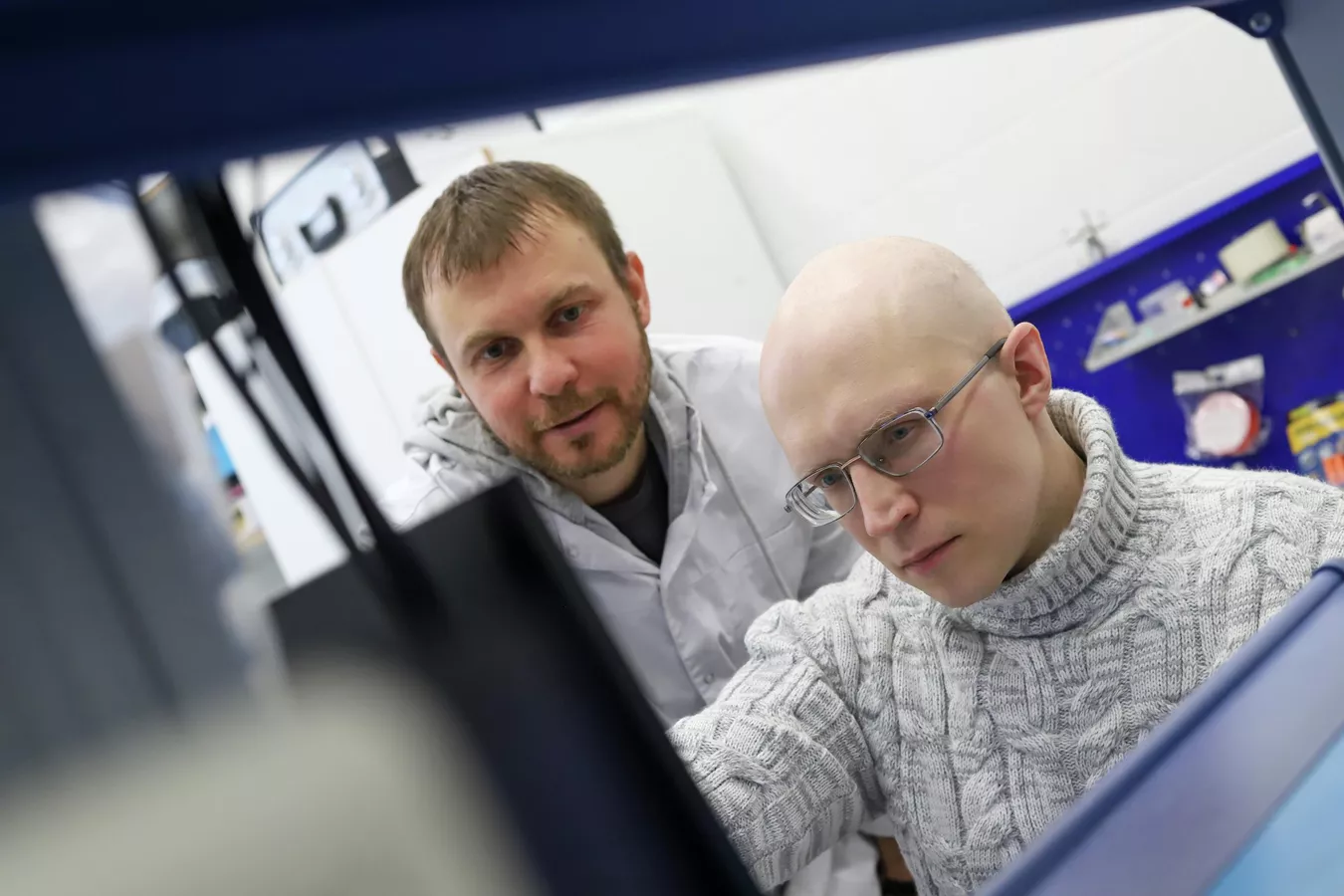
Senior Research Fellows at the Center for Applied Nonlinear Dynamics at the Immanuel Kant Baltic Federal University, Ivan Proskurkin and Ilya Malfanov |
In the future, the research team plans to improve the oscillatory characteristics of the developed materials and create chemomechanical devices based on them that convert the oscillations of the gels into complex movements of soft robots, such as crawling, swimming, and walking.
Source: “RIA Novosti: Scientists have created an artificial muscle analogue”
User profile for student
User profile for student
I give consent to the processing of the personal data provided, with Personal Data Processing Policy acquainted
Confirm consent