University astrophotographers have photographed the Horsehead Nebula (Barnard 33), which is part of the larger Orion Cloud nebula in the constellation of the same name. Horsehead is a typical dark nebula, a relatively dense cloud of dust that absorbs the light of nearby stars. According to astronomers, the characteristic dark silhouette of the nebula is clearly visible against the background of the reddish glow of clouds of ionized hydrogen, illuminated by Alnitak — a blue supergiant with a mass of about 18 solar masses, entering the Orion belt.
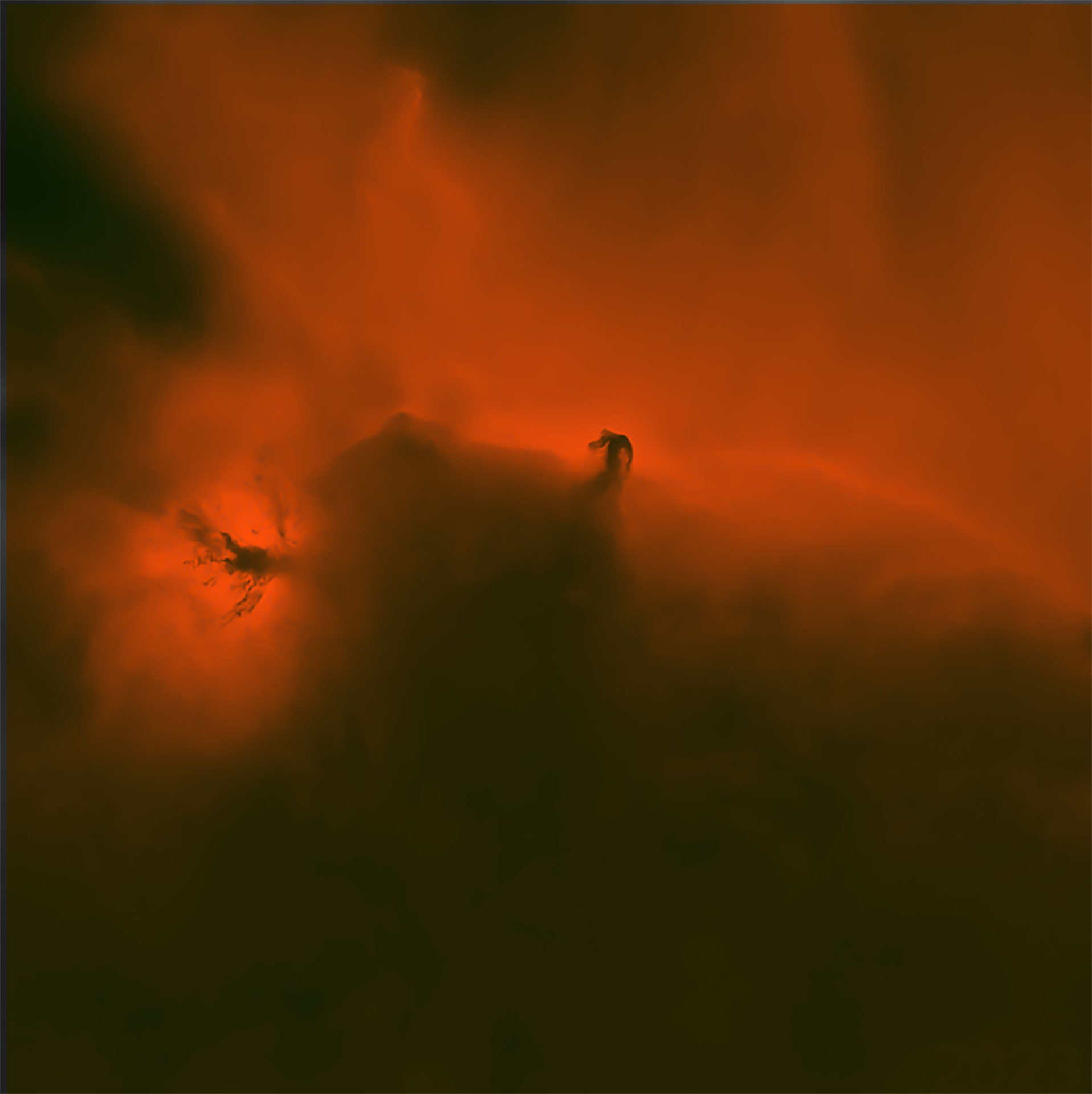
The Horsehead is located in our Galaxy about one and a half thousand light-years from Earth and is part of the huge gas and dust Orion molecular cloud complex.
| Alexey Baigashov, Head of the Astrosociety of the IKBFU: |
| The nebula looks modest against it’s background, but do not be deceived — it’s diameter is about three and a half light-years, that is, comparable to the distance from the Sun to Alpha Centauri. The mass of the nebula is also impressive — according to various estimates, it can reach 250 times the mass of the Sun! However, this is not surprising — right now, star formation processes are actively taking place behind the dark veil of this nebula, which can be judged by infrared images of the nebula. Currently, astronomers count about a hundred protostars forming from gas clouds in the nebula. |
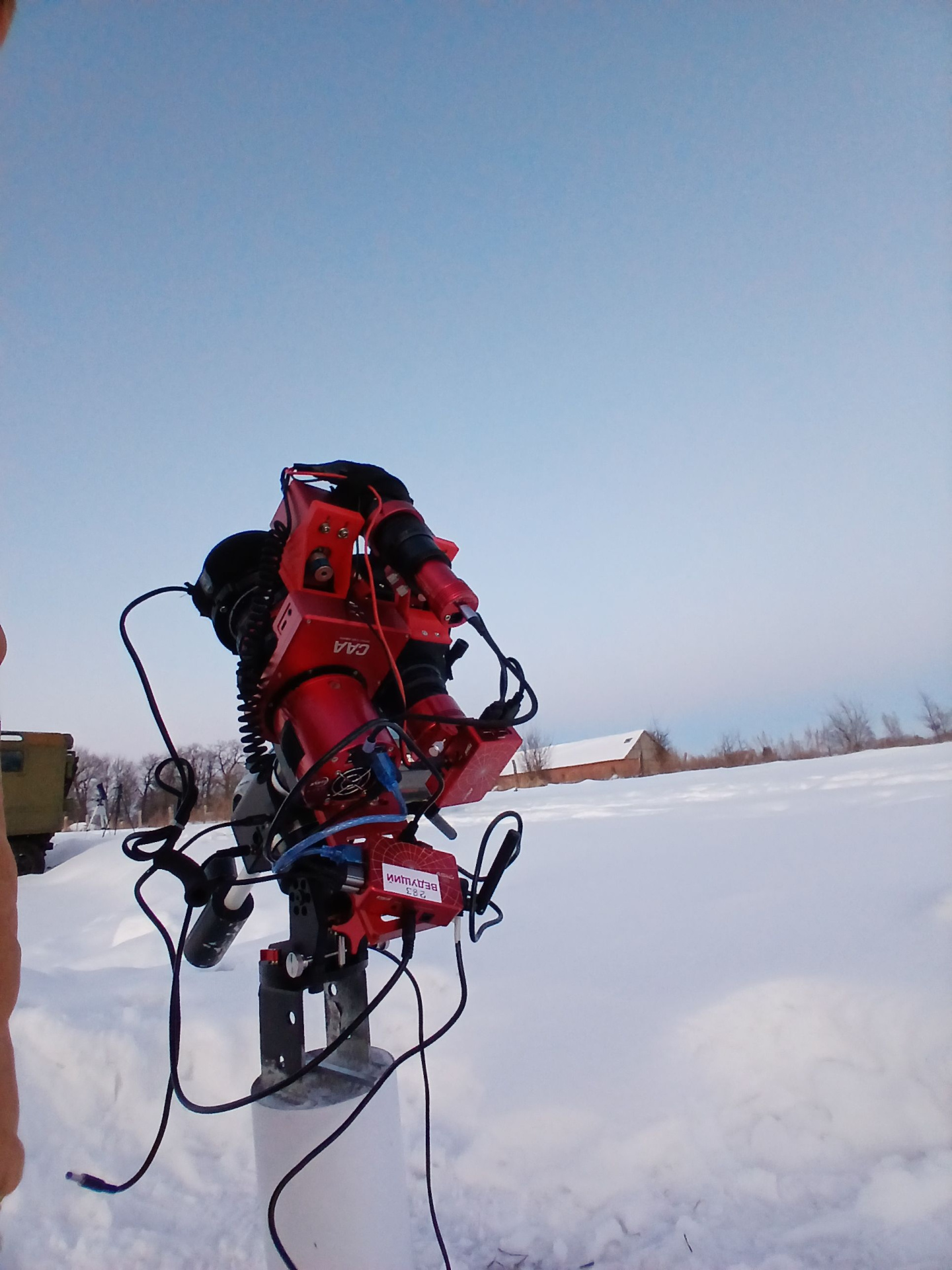
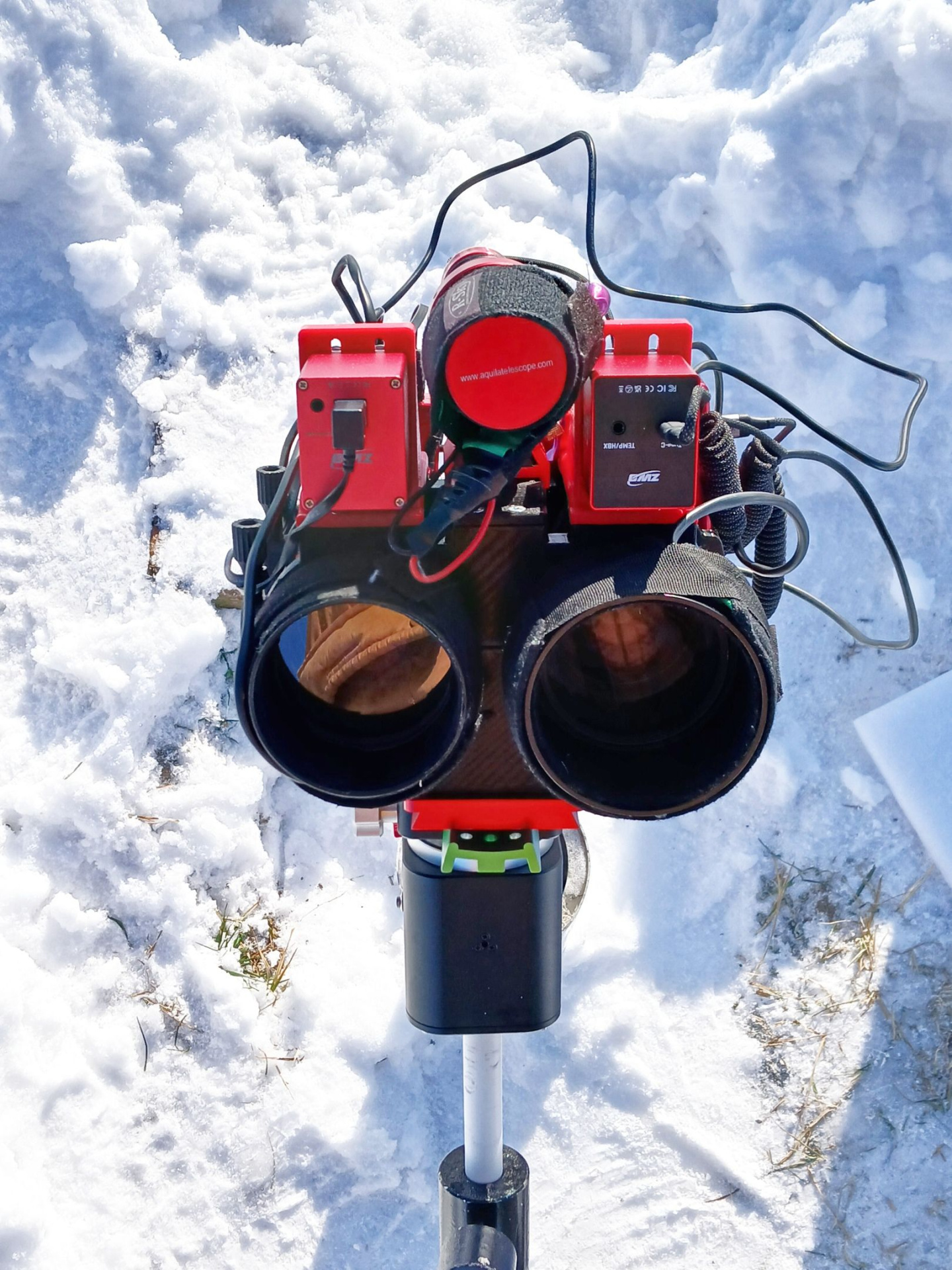
To assemble a beautiful combined image of a Horsehead, university astrophotographers needed to shoot 72 frames with a shutter speed of five minutes each for six hours. The shooting was also unusual — in order to more effectively collect the dim light of a distant nebula, a special system of two cameras for astrophotography and lenses mounted on them was installed on the mount. In order to reliably record such a configuration of the filming equipment, the participants of the Astronomical Community of the IKBFU designed a special lens mount, printed on a 3D printer. The entire structure was installed on a clear night at our suburban astronomical observation site with minimal light pollution, which allowed us to obtain high-quality images of the dark nebula.
User profile for student
User profile for student
I give consent to the processing of the personal data provided, with Personal Data Processing Policy acquainted
Confirm consent