Scientists have collected a unique set of data that enables doctors to trace the dynamics of post-stroke patients' rehabilitation using two important indicators at once — neuronal activity and cerebral oxygenation. The obtained dataset can be used by doctors for assessment of effectiveness of patients’ rehabilitation, and also for choosing individual programmes for them. The findings have been published in the journal Scientific Data.
A stroke is a disruption of blood flow to the brain caused by bleeding or vascular occlusion that leads to tissue damage. Most people who have experienced a stroke face motor impairments: complete or partial loss of mobility in an arm, leg or side of the body (usually on the side that is opposite to the affected area in the brain).
There are programs of rehabilitation after a stroke, and their efficiency considerably depends on the accuracy with which a doctor assesses the patient’s brain condition and chooses an appropriate treatment plan. The extent of brain tissue damage is estimated with the help of MRI and electroencephalography (EEG) — methods that enable doctors to identify the area of damage and trace which brain cells’ activity has been disrupted by the stroke. However during rehabilitation MRI is not usually used regularly due to the high cost and complexity of the equipment, and EEG is not sufficiently informative as a diagnostic method. As a result doctors cannot monitor if the condition of a patient improves. Moreover, such methods don’t give information about cerebral circulation that was disrupted during a stroke.
Scientists from Immanuel Kant Baltic Federal University (Kaliningrad), Skoltech (Moscow), Federal State Budgetary Institution «Federal center of brain research and neurotechnologies» (Moscow) and Lomonosov Moscow State University (Moscow) have published in open access the first dataset, that helps to track changes in the condition of people after a stroke over time.
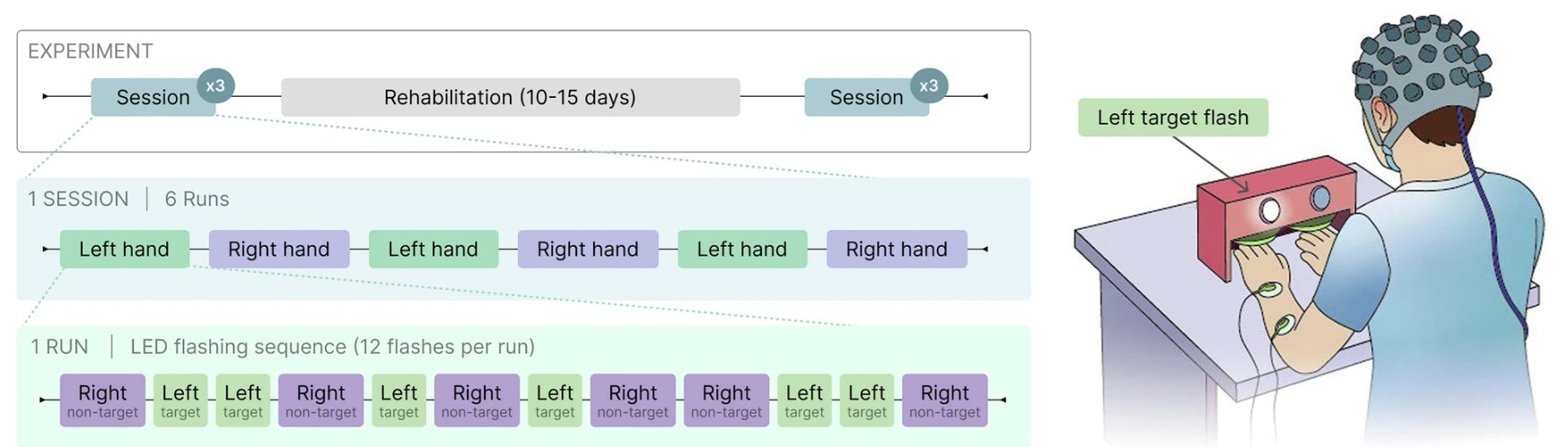
Scientists conducted a study in which 16 volunteers aged 42 to 71, who experienced a stroke and had moderate motor impairments, took part. All patients participated in a standard two-week rehabilitation programme under the supervision of doctors.
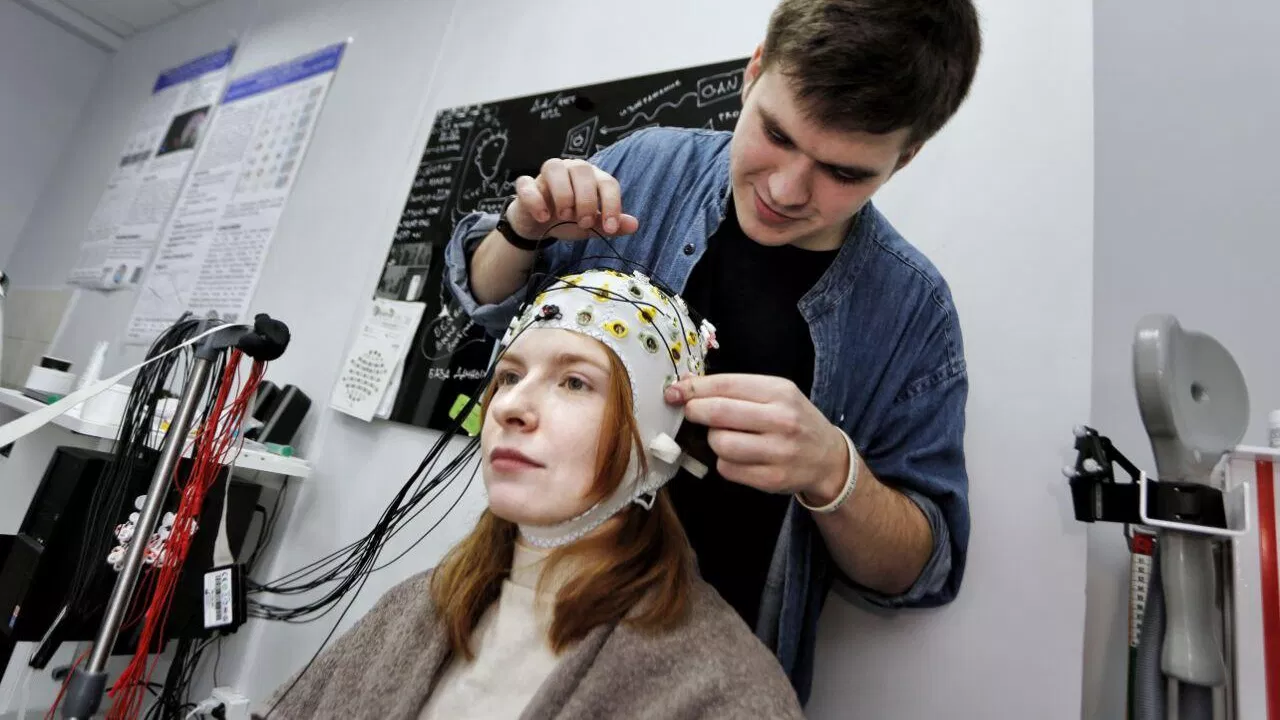
During this period the researchers asked patients to do a simple exercise: to react to flashes of light on the right and on the left, by pressing the button with fingers of the corresponding hand, several times. During each experiment scientists registered the patients’ EEG data and assessed cerebral blood flow. To achieve this patients’ heads were exposed to safe infrared light, which penetrated biological tissues well. By analyzing how tissues absorbed light, scientists assessed how levels of oxygenated and deoxygenated hemoglobin changed in blood. The relationship between these indicators makes it possible to determine how intensively blood flows to particular areas of the brain, and, consequently, the neuronal activity in these areas.
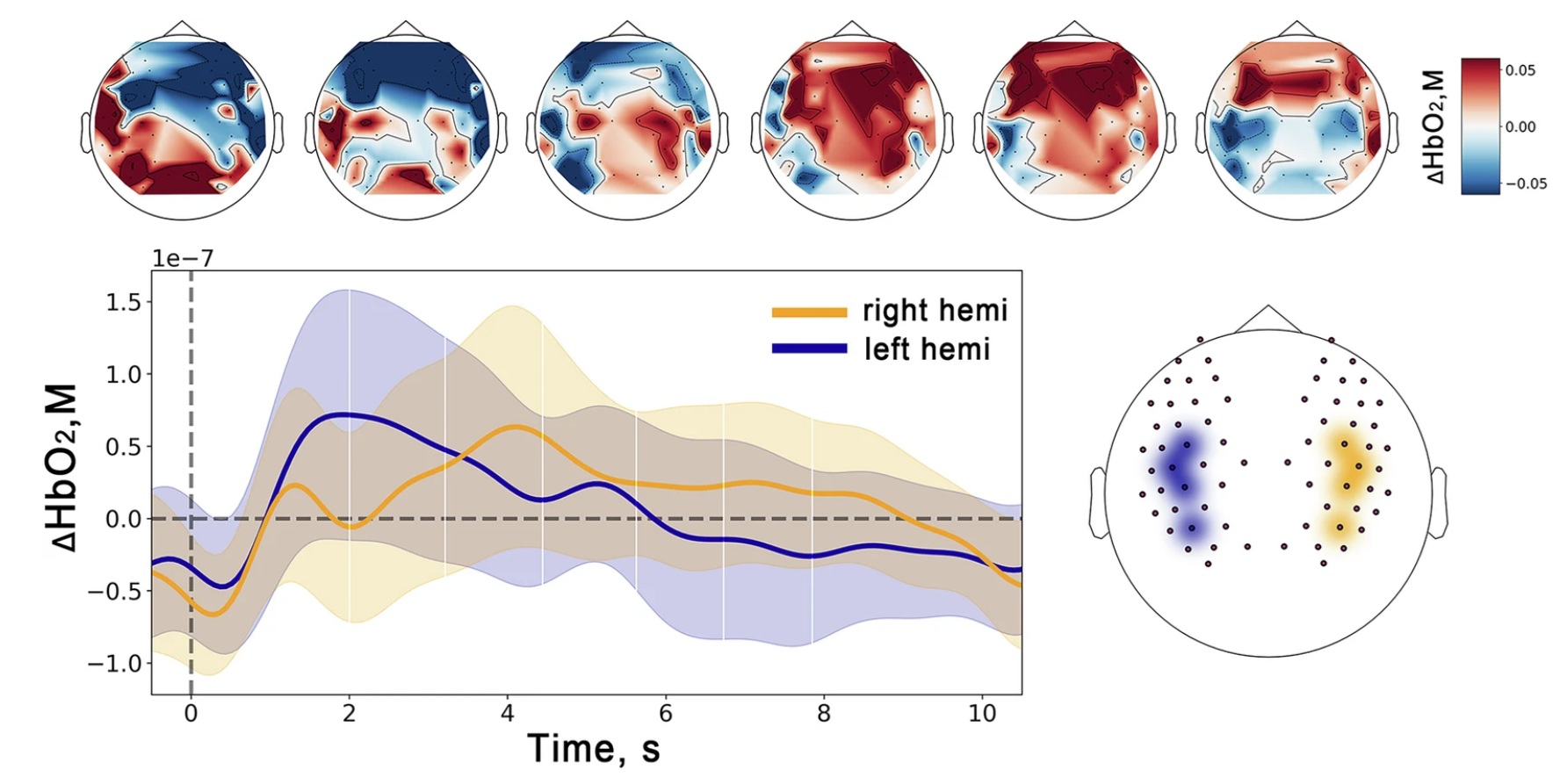
 Analysis of the obtained data showed that during hand movements, which were controlled by the damaged hemisphere (for example, right hand in the case of a stroke affecting the left hemisphere ) scientists observed activation of both brain hemispheres, and the unaffected one (in this case — the right one) was more active. This means that the brain tries to compensate for the damage using resources of the undamaged side.
| Artemiy Berkmush-Antipova, Junior Researcher at the IKBFU Baltic Center for Neurotechnologies and Artificial Intelligence: |
| The combination of data on the electrical activity of the brain and change of the blood flow in it, and also on motor activity of patients allows us to find new markers indicating how well the rehabilitation is progressing and which results can be expected after its completion. The obtained dataset can be useful for further developments in the field of individualized approaches to rehabilitation and brain-computer interfaces. In the future we would like to investigate how these markers can be applied in practice. We are also interested in improving existing neurointerfaces and, probably, developing new ones — based on a multimodal approach. |

User profile for student
User profile for student
I give consent to the processing of the personal data provided, with Personal Data Processing Policy acquainted
Confirm consent