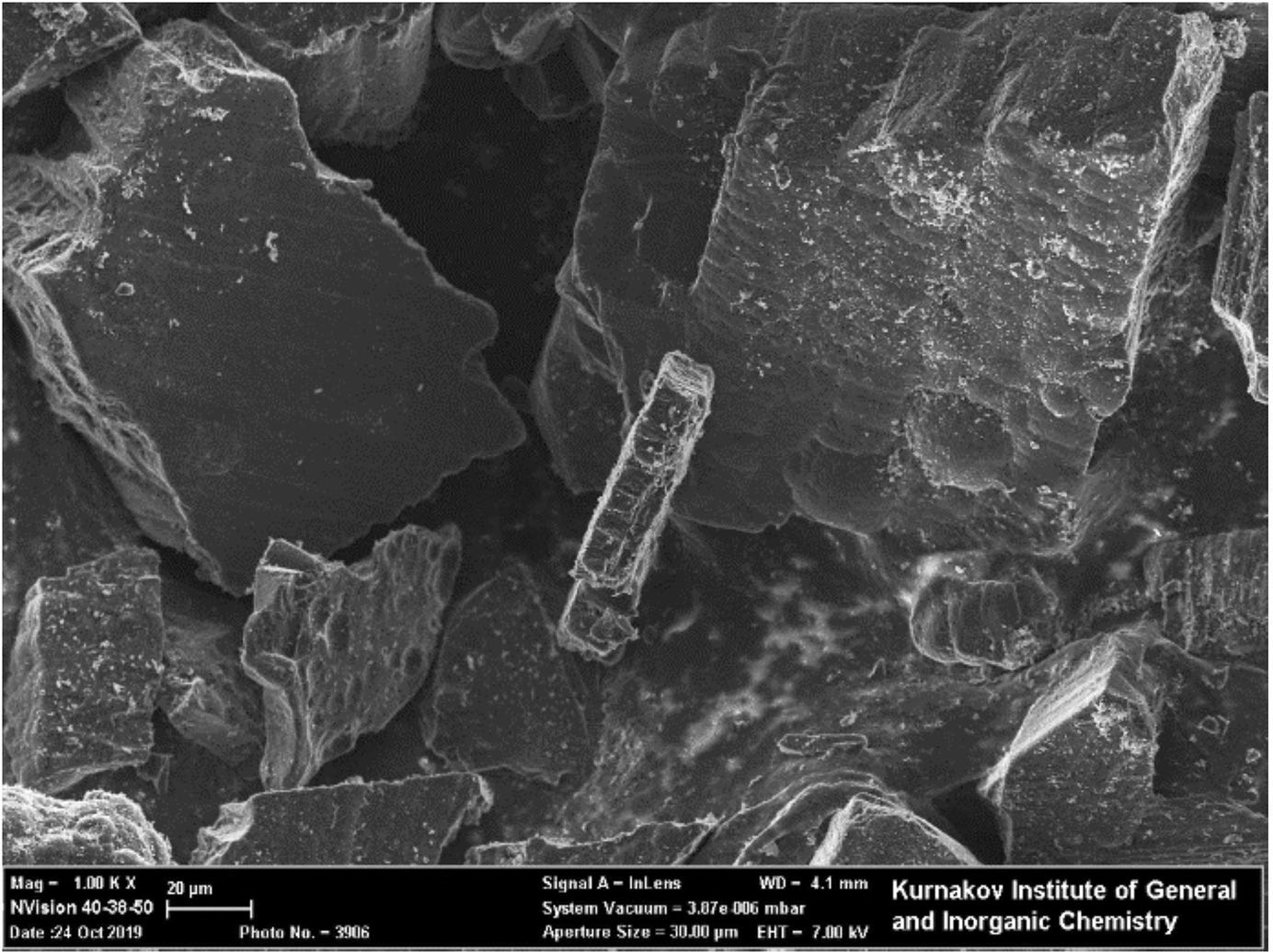
In a joint research project, scientists from Immanuel Kant Baltic Federal University have found how the structure of amorphous carbon — a material used to make negative electrodes for batteries — changes upon heating.
Lithium-ion batteries are used in phones, laptops, electric vehicles, and other modern devices. The negative electrodes (components that conduct electric current) inside them are most commonly made of graphite, an inexpensive carbon material with an ordered layered structure. Disordered carbon is considered a promising alternative because its structure contains numerous defects and voids that can increase battery capacity. However, excessive structural disorder also has its drawbacks — the material may disintegrate more rapidly during operation and release stored charge less efficiently. Therefore, scientists are eager to find an optimal method for processing carbon that would maximize its ability to store and release charge.
Researchers from Immanuel Kant Baltic Federal University (Kaliningrad) and the B.P. Konstantinov Petersburg Nuclear Physics Institute of the National Research Centre “Kurchatov Institute” (Gatchina) determined how grinding followed by heat treatment (annealing) affects the properties of amorphous carbon.
In their experiments, the scientists used three types of samples: the first consisted of amorphous carbon immediately after synthesis, the second contained the same carbon after thorough grinding, and the third was ground and subsequently annealed at 800°C. Annealing is widely used to process various materials, including carbon‑based ones, in order to alter their internal structure and potentially improve their properties.
Using the method of nuclear magnetic resonance spectroscopy, the researchers compared the spectra of the acquired samples and found that the original material had practically no pores and consisted of randomly arranged graphite fragments. After grinding, the shape of these structural blocks remained largely unchanged, but the material became looser and more porous. As a result, it interacted more actively with the surrounding environment and underwent partial oxidation, acquiring oxygen- and hydrogen-containing groups in its structure. The discovered proton signals also made it possible to estimate the size of the newly formed pores.
Ordered regions resembling graphite in structure began to form in the sample that had been ground and heated to 800°C. Such partial ordering may allow the material to simultaneously be durable, have the high capacity characteristic of disordered carbon and efficient charge-release properties associated with graphitic structures.
| Kupriyanova, Doctor of Physical and Mathematical Sciences, Professor at the Institute of High Technologies and Head of the IKBFU Laboratory of Magnetic Resonance Methods for the Study of Matter at Immanuel Kant Baltic Federal University. |
| Our research has shown that by controlling the degree of grinding and the heating temperature of amorphous carbon, its structure can be tailored to produce a material with the desired properties. For example, this approach could improve the conductivity and stability of anodes, making it possible to develop batteries with higher capacity and longer service life. In the future we are planning to study in detail how ordered structures in amorphous carbon affect ion transport in batteries under practical conditions |

User profile for student
User profile for student
I give consent to the processing of the personal data provided, with Personal Data Processing Policy acquainted
Confirm consent