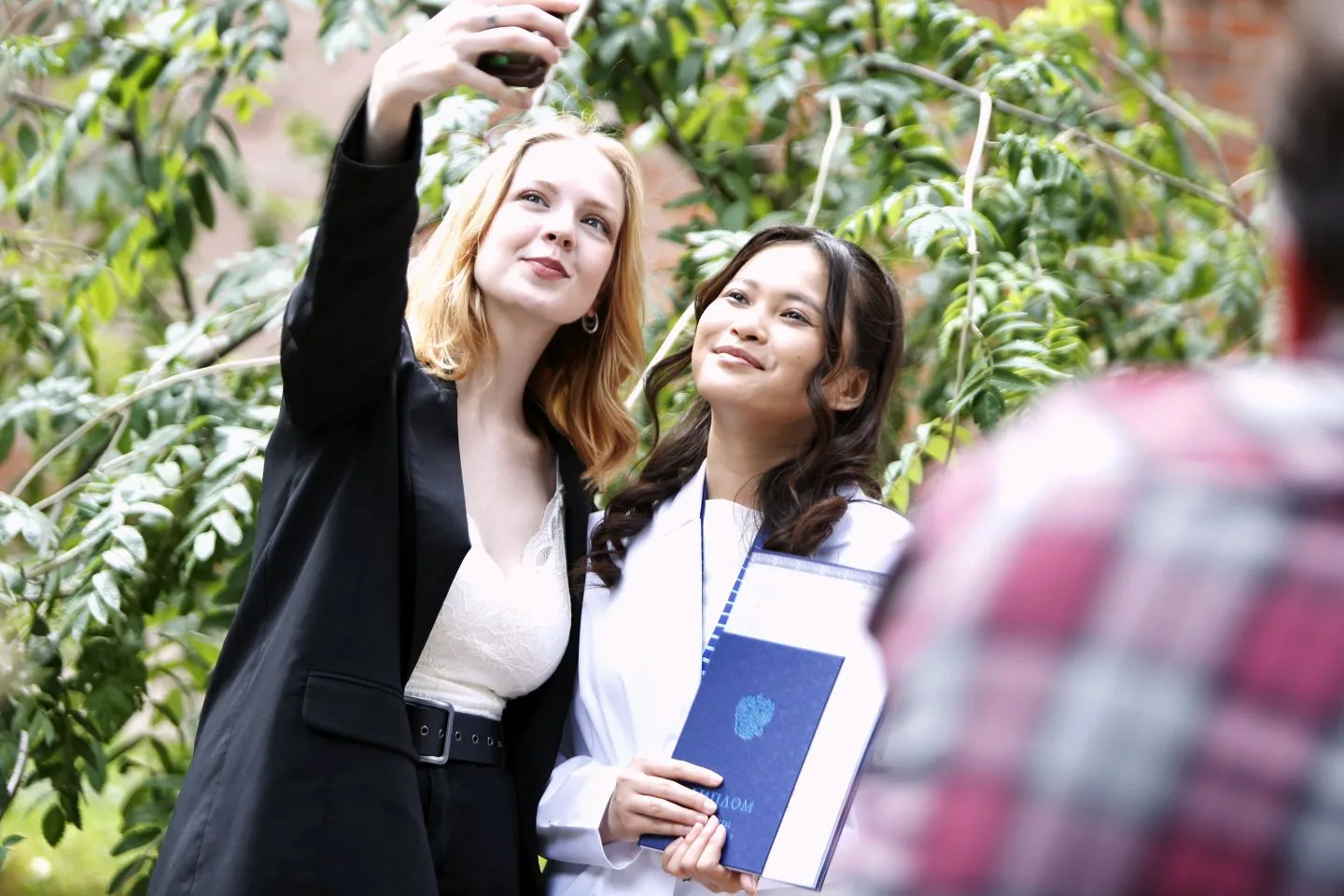
In 2026, 193 international students from 21 countries — including China, India, Belarus, Kazakhstan, Uzbekistan, Latvia, Ecuador, Azerbaijan, Germany, and Brazil — graduated from Immanuel Kant Baltic Federal University.
The largest group of international graduates completed bachelor's or specialist programmes. The most popular field of study was General Medicine (offered in both Russian and English) followed by linguistics, psychology, IT, education, tourism, design, and law.
Beyond the standard diploma, international graduates were issued a European Diploma Supplement — an official document that translates academic achievements into English and explains the programme structure, university status, acquired competences, and subjects studied to employers and universities abroad.
The graduates shared their stories with kantiana.ru — discussing their reasons for choosing Kaliningrad and IKBFU, their fondest memories of student life, and their plans for the future.
Luu Thi Thanh Mai, Vietnam
General Medicine
My Russian was already pretty good when I started — I'd graduated from the Russian embassy school in Vietnam. But it was a language competition that actually brought me here; the prize was a free education at any Russian university, and that's how it all started.
Kaliningrad was the first Russian city I ever visited. Being in a new country is a strange experience, even when you speak the language. The first thing that really surprised me was how drivers just stop for pedestrians. Back home, you wait for the cars to pass — here, it's the other way around. The pace of life was different too; even crossing the road felt scary at first.I also arrived in the middle of the pandemic — lockdowns, masks, restrictions... But even with all that, there were moments I'll never forget. I was mesmerised by Kaliningrad's architecture and, of course, the Baltic Sea — I'd heard so much about it and had always dreamed of seeing it.
Medicine wasn't a random choice — my dad is a neurosurgeon and my mum is a GP. That said, they didn't push me into it. In fact, they tried to talk me out of it — said it was too tough for a girl. But I decided to give it a shot. The first few years were hard — the workload was overwhelming, the pace was intense, and I seriously questioned whether I'd made the right choice. But I got used to it, learned to manage my time, and made it to sixth year.
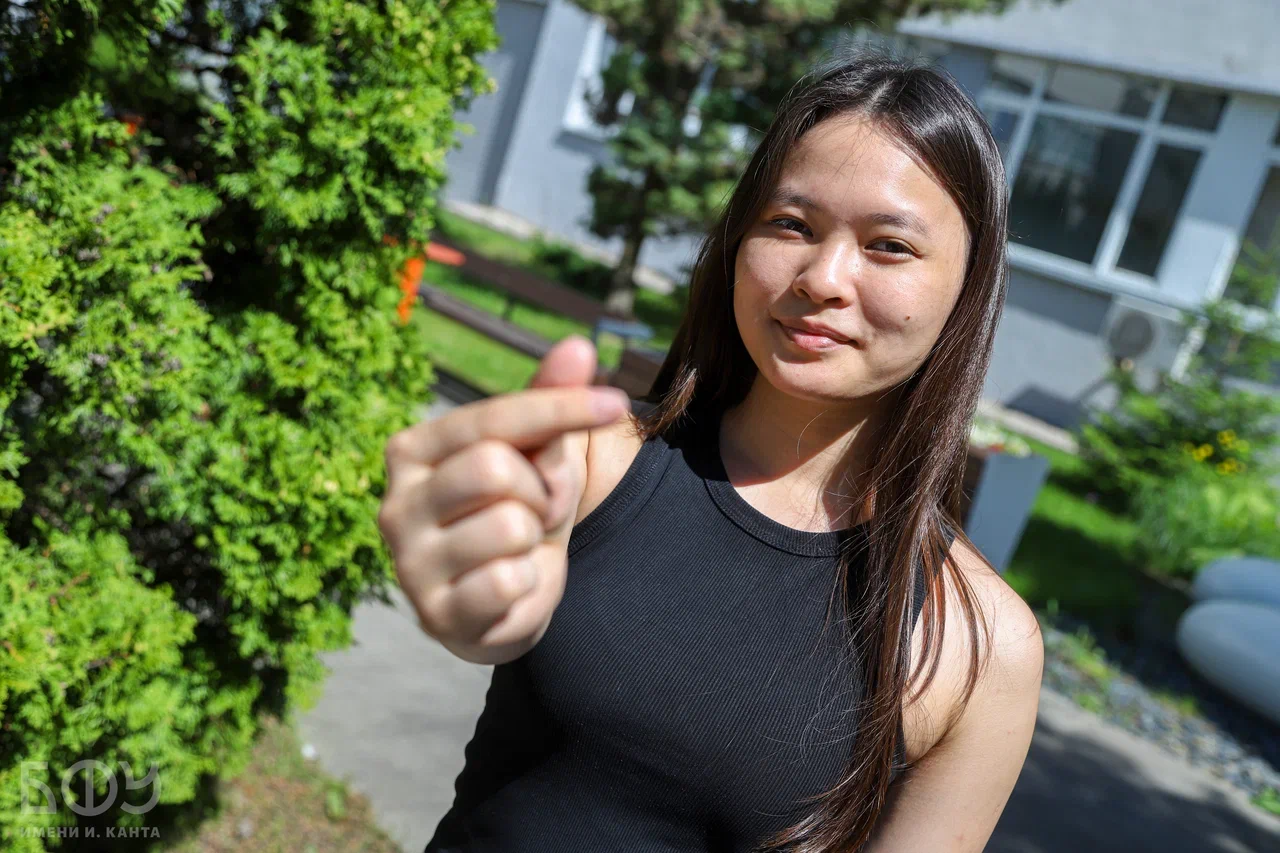 Right now, I'm figuring out what to do next. I wanted to apply for a residency straight away, but the competition is fierce, so I've decided to wait — I want to gain more work experience and prepare myself better. My plan is to return to Vietnam. A Russian medical degree is highly valued there, but to set up my own practice, I first need to work for a year in a state hospital and get certified.
What will I take away from Kaliningrad and the university? First and foremost — experience that you can't really put a price on. And also a special feeling: when you push through something incredibly difficult and realise you've come out stronger. And, of course, memories — of the sea, of walks around the city, of discovering a new country. All of that will stay with me forever.
Csenge Kovacs, Hungary
Hotel Management and Tourism
When it came to choosing a country, Russia was the obvious choice — I'd been learning Russian for three years, so it made sense to continue rather than start over with a new language. And it turned out that studying and living here was more affordable than in most of Europe. I wanted a city that had a European feel. I liked St Petersburg and Moscow, but the cost of living was too high. So I settled on Kaliningrad — it seemed like the perfect compromise. To be honest, my mum wanted me to go to Izhevsk — my brother was studying there, and she wanted us to be close. But in the end, I chose my own path. And I'm glad I did — I really like Kaliningrad. It's a clean, lively city, full of tourists and young people.
I didn't choose Hotel Management and Tourism by chance — I dream of becoming a supervisor at a major international chain, like Mercury, which is known worldwide.
I didn't have any set expectations of the university or the city — I just told myself: I'll see how things go, and if something doesn't work out, I won't get too upset. But of course, the first few months were tough. I had to sort out paperwork, deal with the administration, and learn to live independently. The hardest part was making friends — it felt like I was facing everything alone. But gradually, things fell into place. I met people, settled in, and it got easier with each passing day.
I made my first friends in the dormitory — students from Vietnam, Uzbekistan, Russia, and Ecuador. We were a truly international group. The Russian students were wonderful — they were patient with my language mistakes and always supportive, and I tried to help them whenever I could. It became this beautiful exchange of kindness.
Looking back now, I realise that Kaliningrad has become a second home to me.
Ma Yanlong, China
Service in the Oil and Gas Industry
I came to study in Russia because my family has always had a warm regard for Russian culture — especially my dad. He works for an oil company in China, and there are many Russian specialists in his organisation. He genuinely loves Russia, and that had a big influence on my decision.
At first, I studied at a preparatory course in Volgograd — learning Russian from scratch, as I knew almost no Russian before that. The language was incredibly difficult — I'd even say terribly difficult. But I studied hard and eventually managed to gain a place at Immanuel Kant Baltic Federal University. For my undergraduate degree, I chose the teacher training programme specialising in Russian and Chinese; I also studied English — overall, I really liked the range of subjects. For my master's, I studied oil and gas engineering.
Before moving here, I knew almost nothing about Kaliningrad — only that it was by the sea. When I saw it for the first time, I realised straight away: it's beautiful. My first impressions of the city and the university were very positive. What struck me most was how kind and helpful people are here. If you're confused about something on the street, they'll come over, offer help, and ask if you need assistance. I felt this particularly keenly at first, when my Russian was rather poor.
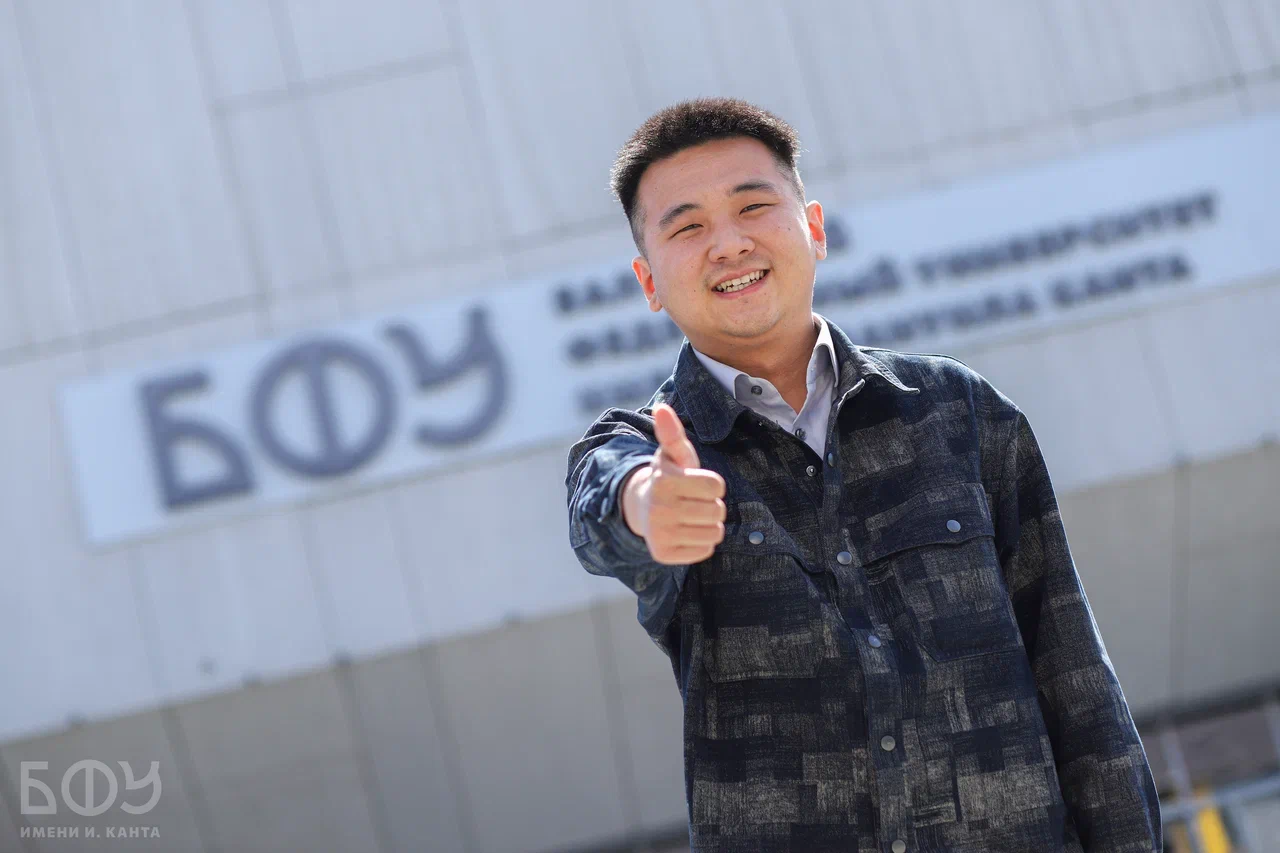 Of course, Russian culture and Chinese culture are very different. At first, I was struck by how direct Russians are in conversation — in China, we tend to be more diplomatic and indirect. But over time, I adapted, learned to understand these cultural nuances, and found ways to connect.
I was very active in student life at the university. For a long time, I served as chair of the Union of Chinese Students in Kaliningrad — supporting my fellow students, building connections with embassy representatives, and organising events. I also engaged in research: I wanted not just to absorb knowledge, but to learn how to use it.
After I graduate, I plan to go back to China — I've already been offered a position with Sinopec. My Russian will be a real asset: our countries have many joint projects, and professionals who understand both sides are highly valued.

User profile for student
User profile for student
I give consent to the processing of the personal data provided, with Personal Data Processing Policy acquainted
Confirm consent