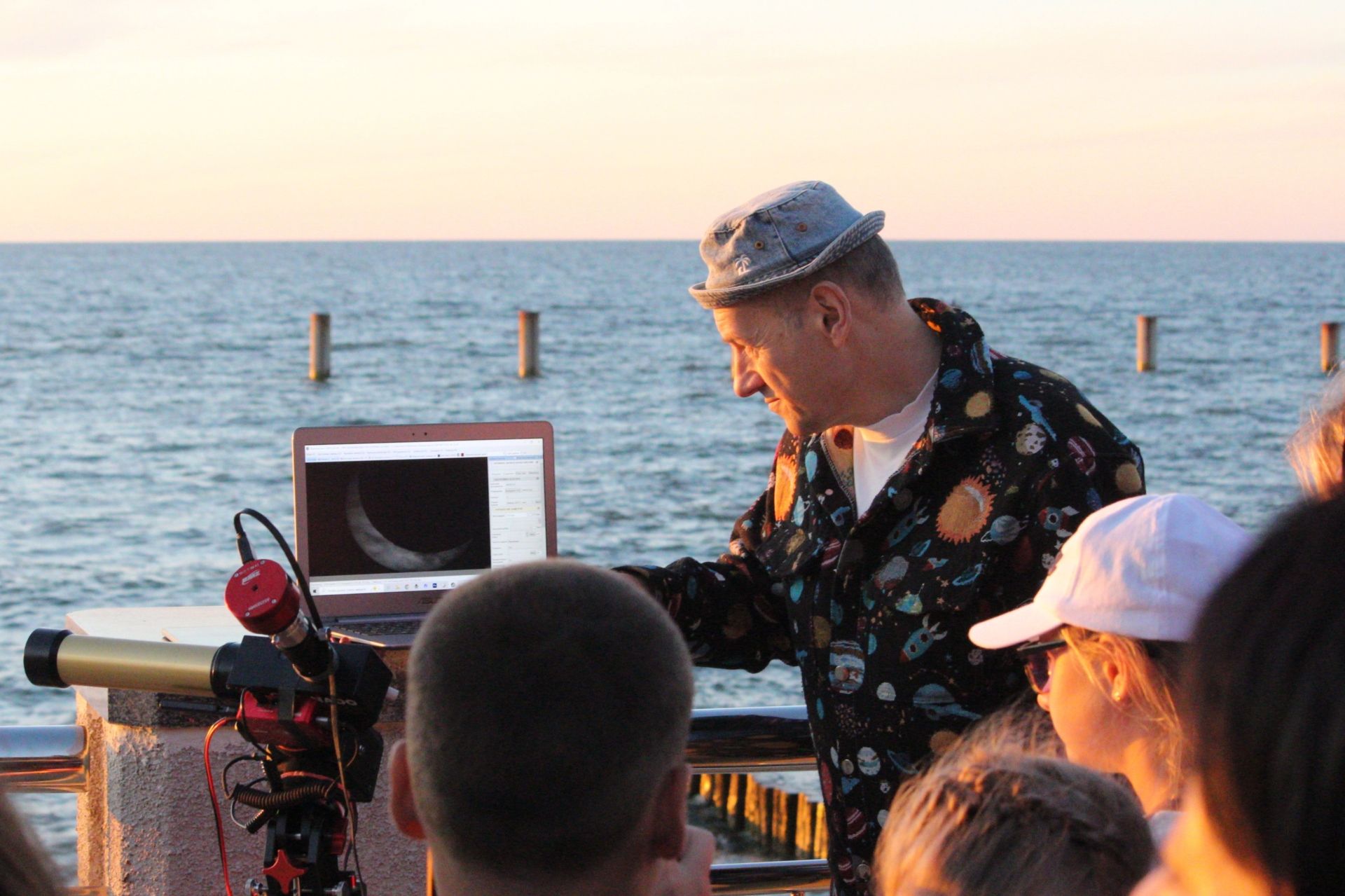
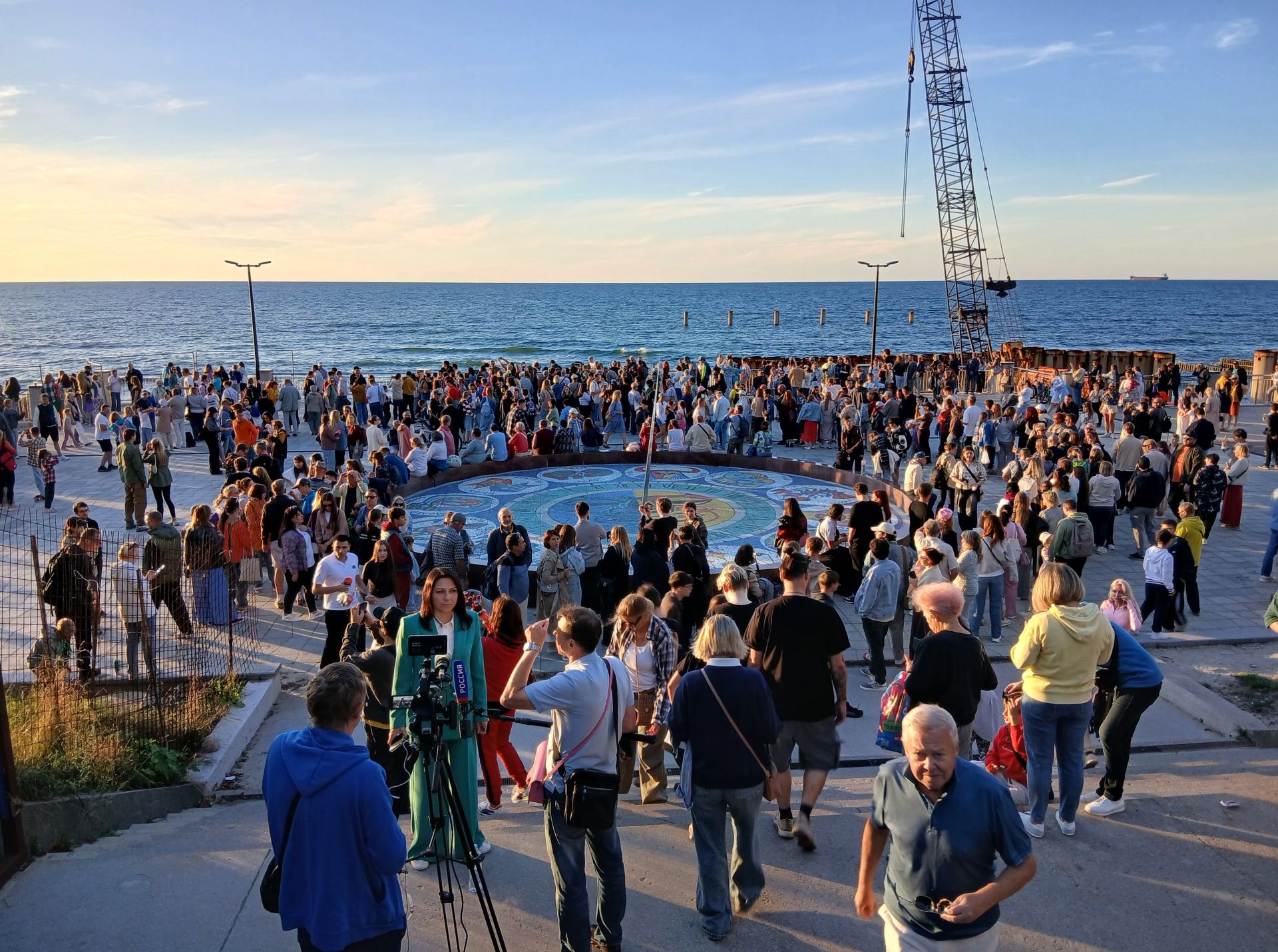
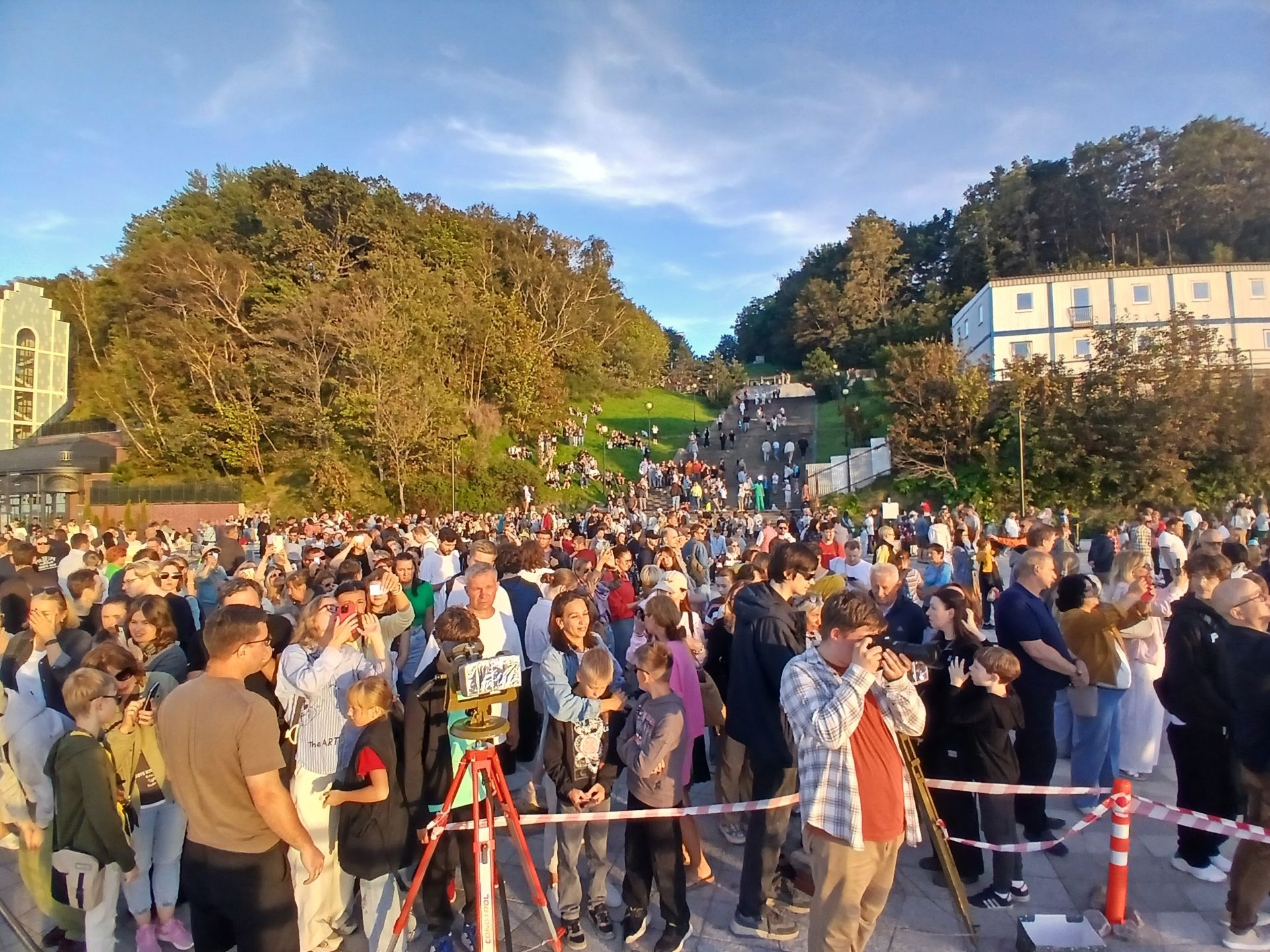
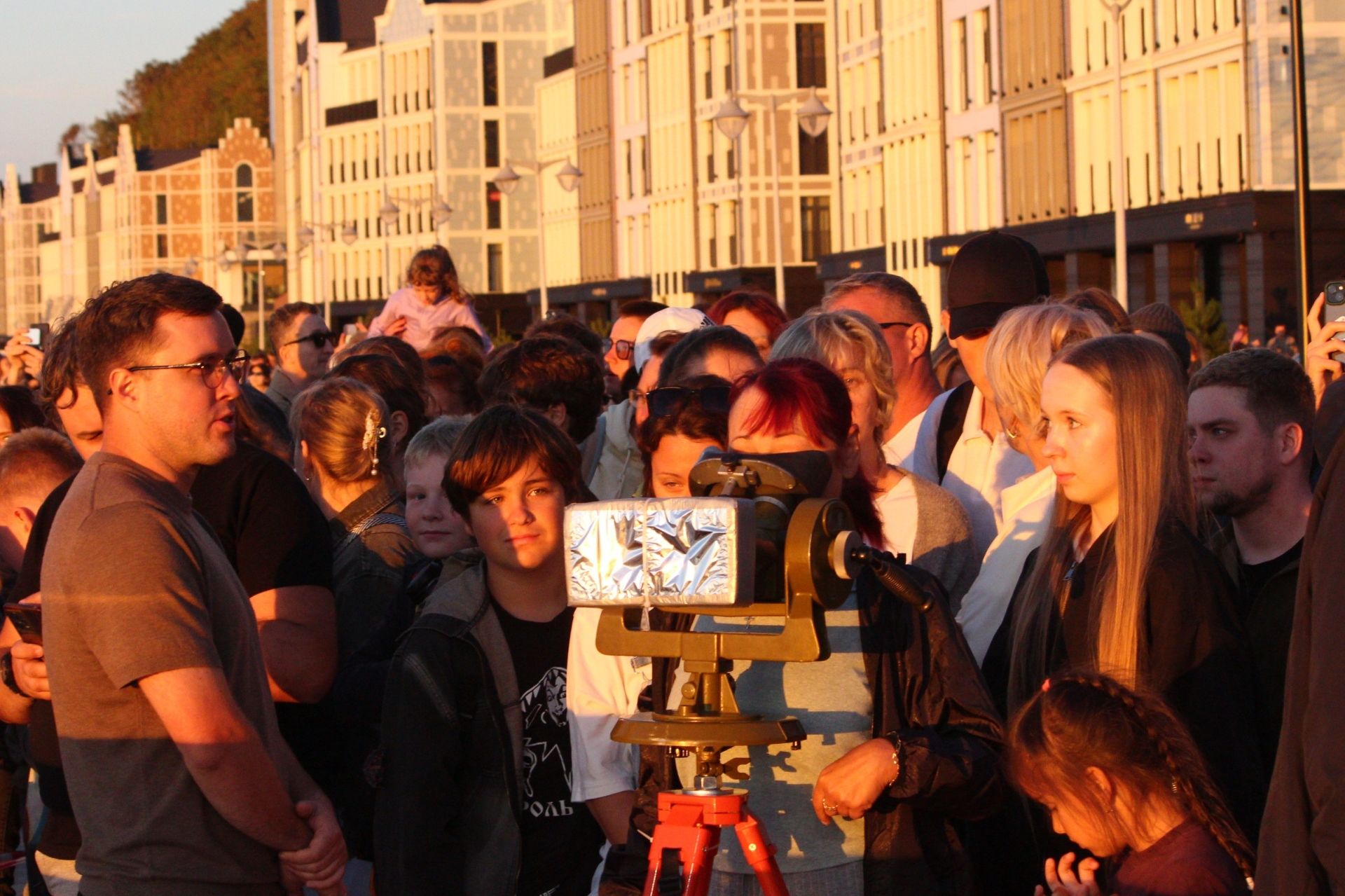
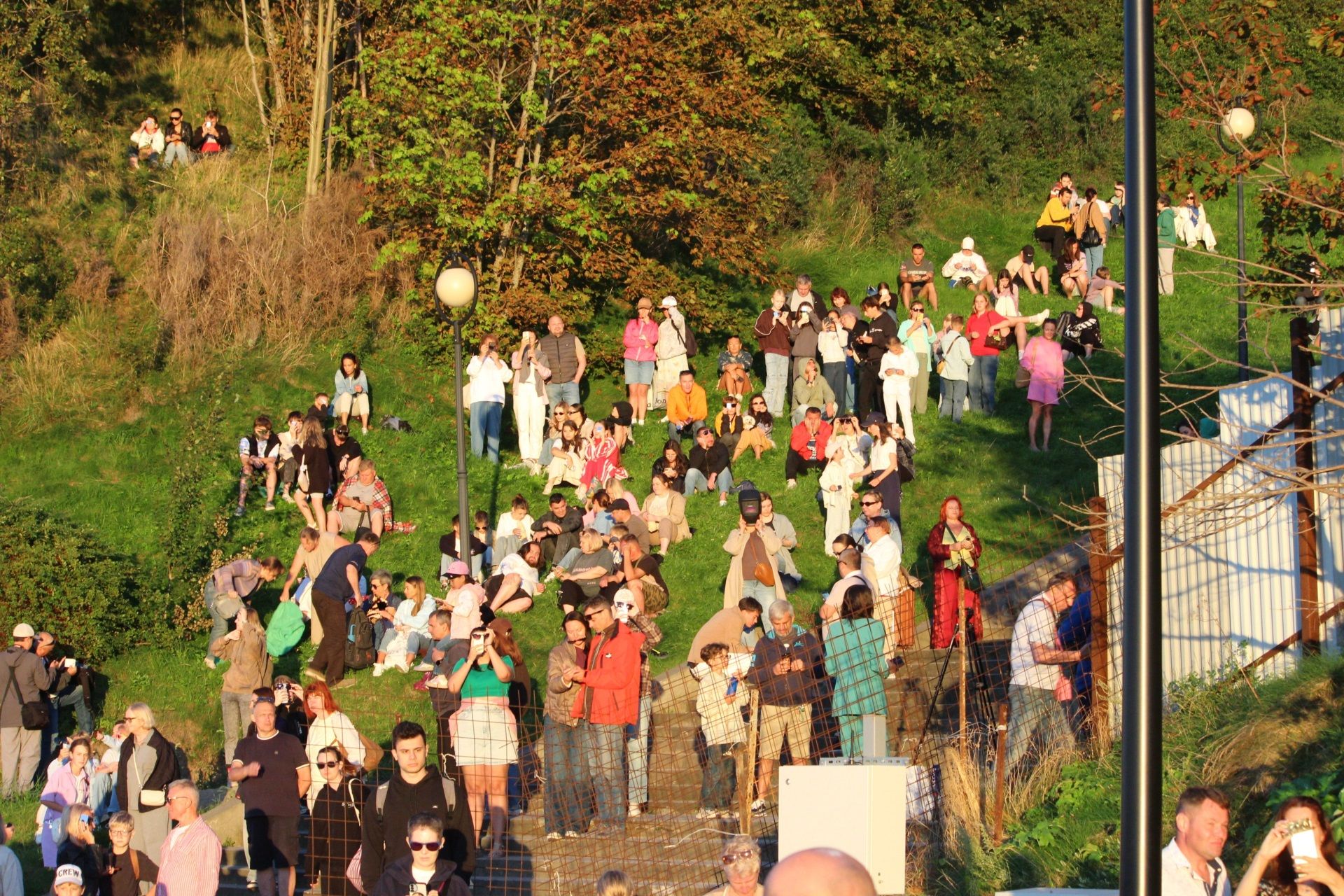
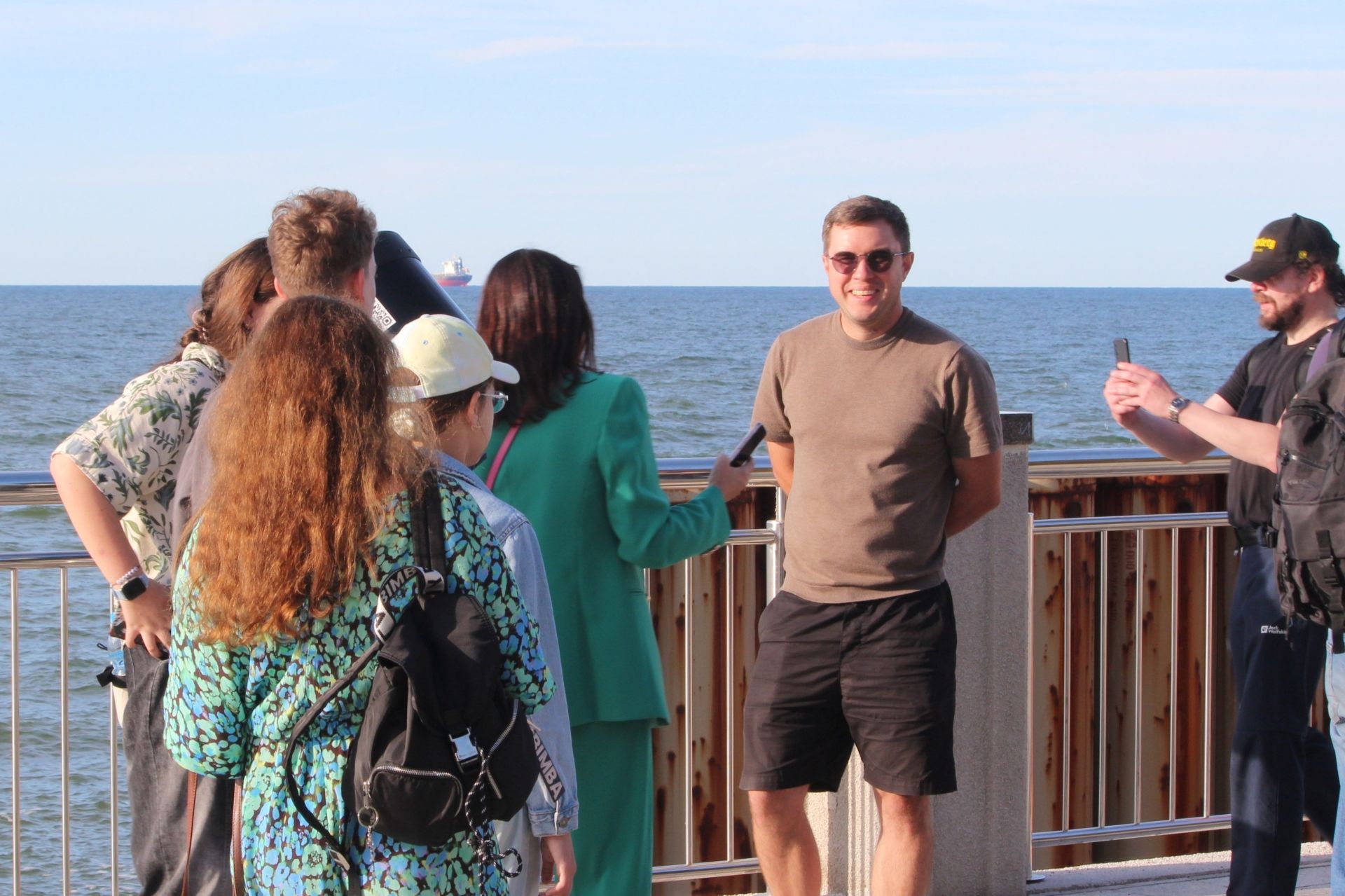
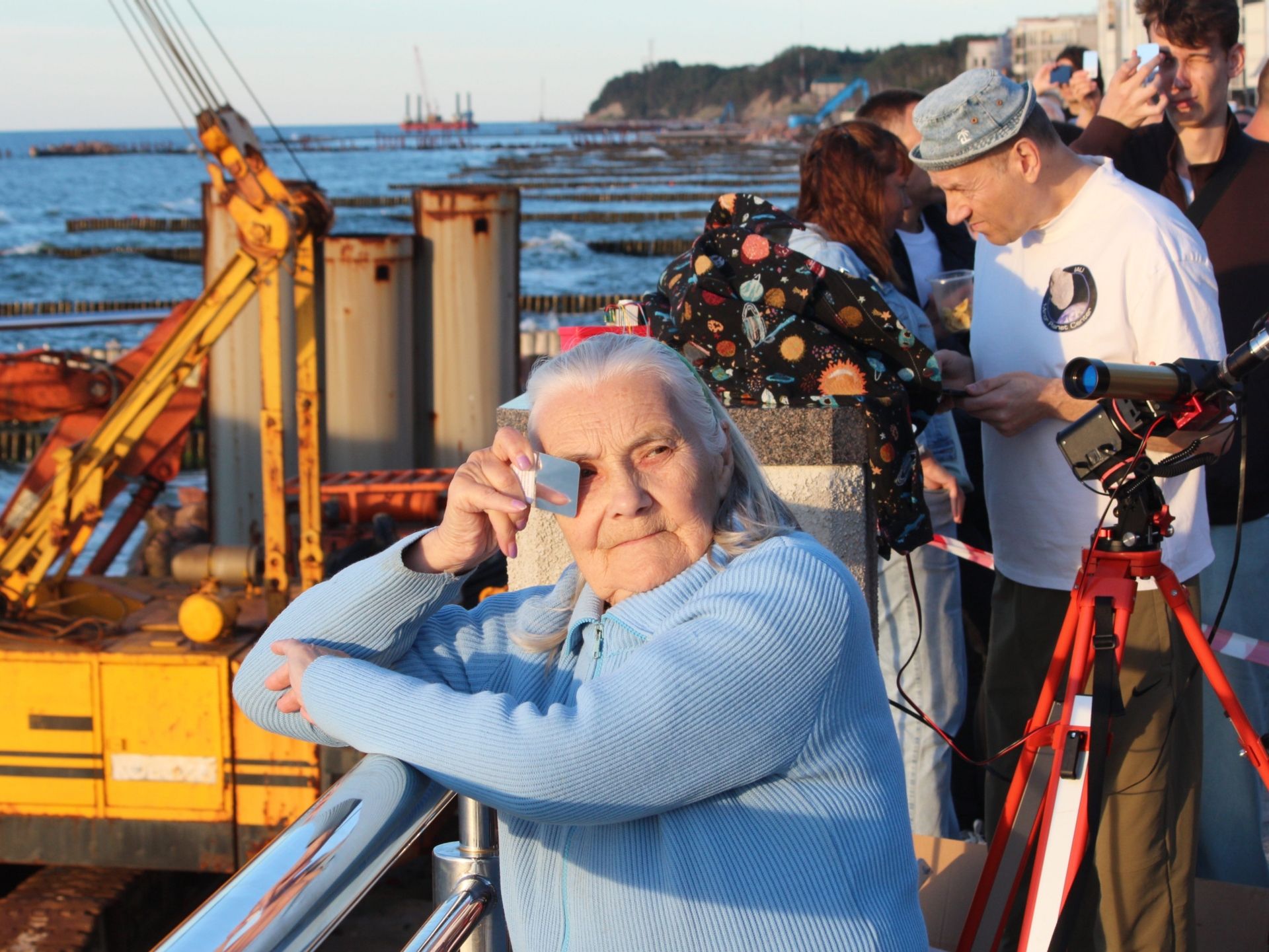
On the evening of 12 August, public viewings of the partial solar eclipse — organised by the Astronomical Community of Immanuel Kant Baltic Federal University — took place with great success on the Svetlogorsk waterfront. The rare astronomical phenomenon drew enormous interest from residents and visitors to the region: over two thousand people gathered to watch the lunar disc slowly cover the sun.
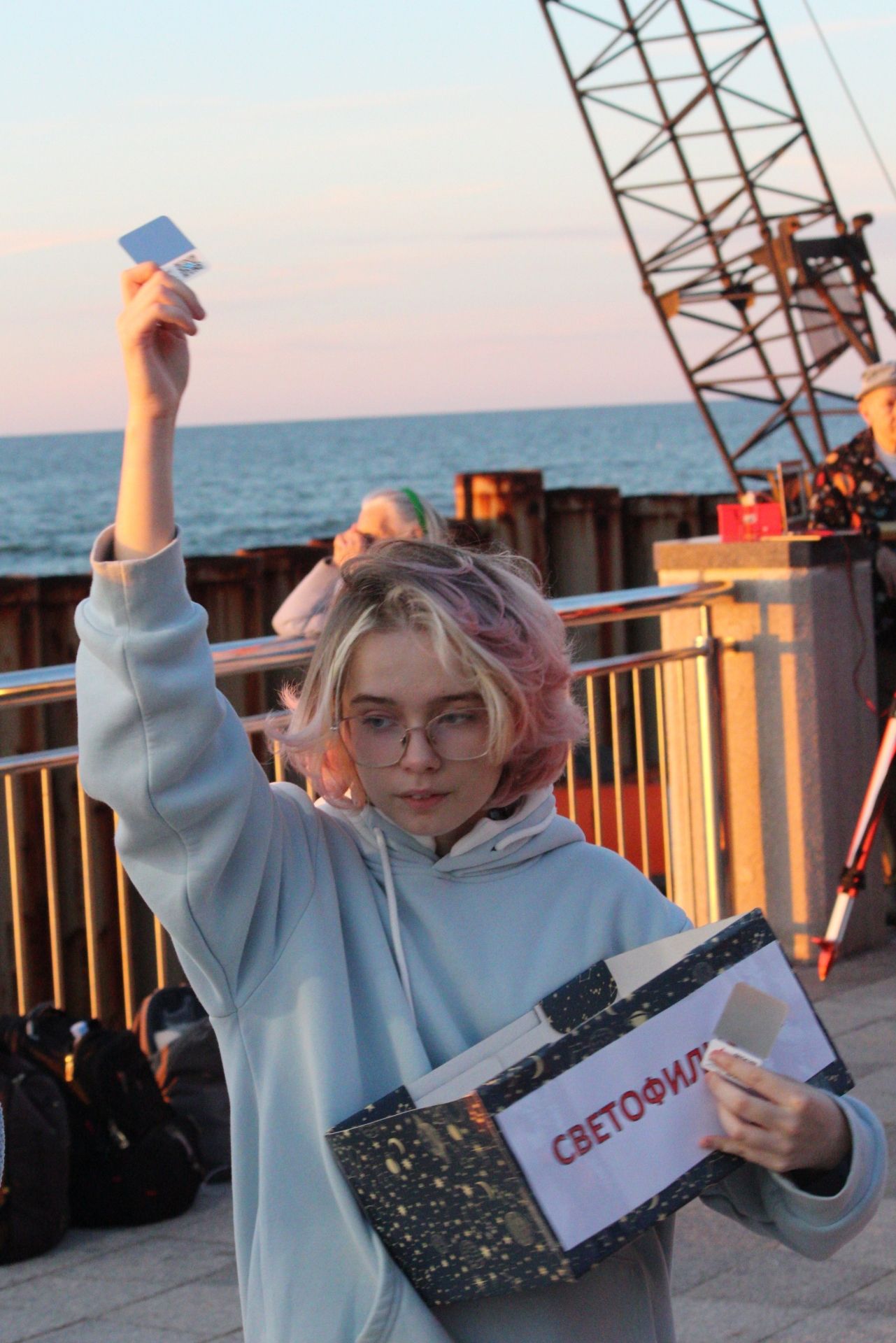
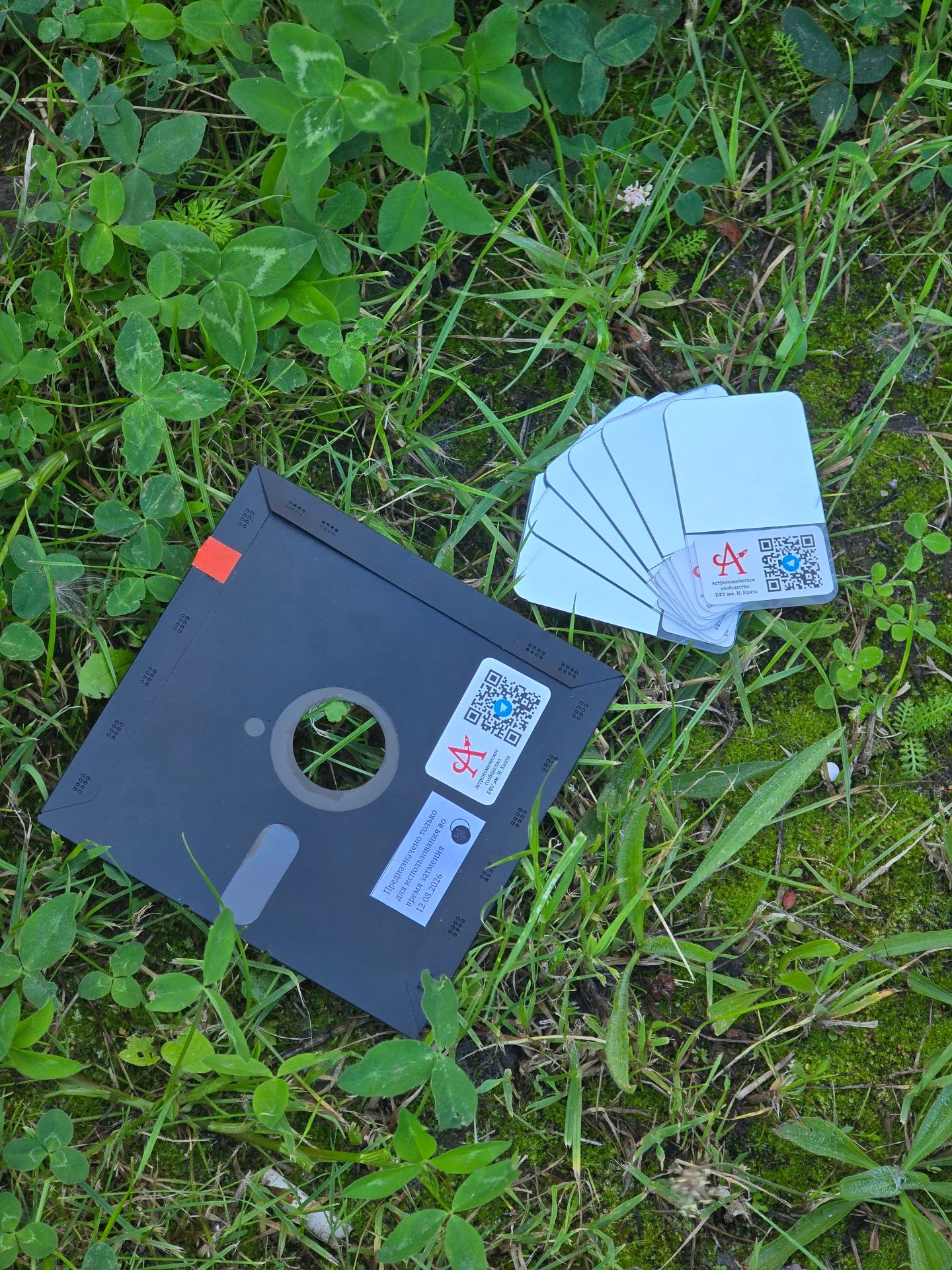
Visitors were able to observe the process through two TZK binoculars and a large 280‑mm telescope fitted with special protective filters. To satisfy the curiosity of everyone present and avoid long queues, members of the Astronomical Society had prepared and distributed more than seven hundred small light‑filter cards in advance. These cards — coated on both sides with a metallised film — allowed spectators to observe the eclipse safely from anywhere along the embankment, even at sunset.
Alongside the public programme, the university's astronomers observed the eclipse using a specialised instrument — the Coronado PST solar telescope. Unlike conventional ones, the Coronado contains a narrow‑band H‑alpha filter that blocks all sunlight except the first spectral line of hydrogen. It is within this narrow band that the features of the solar corona — protuberances and plasma ejections — become visible. Normally, these large‑scale but relatively faint phenomena are obscured by the dazzling brightness of the solar photosphere. Within this narrow spectral range, however, scientists are able to capture them in all their splendour.
Although the 11‑year solar activity cycle is currently on the wane, astronomers in Kaliningrad have managed to capture a large solar prominence rising above the edge of the solar disc. Even a single such eruption of solar material is many times larger than Earth — in the final photographs, it can be seen in detail rising from the lower right edge of the solar disc.
The IKBFU Astronomical Community would like to express its sincere gratitude to the administration of the Svetlogorsk urban district, the Department of Strategic Communications, and the Institute of Applied Physics and Technologies for their assistance in organising and conducting the public observations — as well as to all the volunteers who actively helped at the event.


User profile for student
User profile for student
I give consent to the processing of the personal data provided, with Personal Data Processing Policy acquainted
Confirm consent