
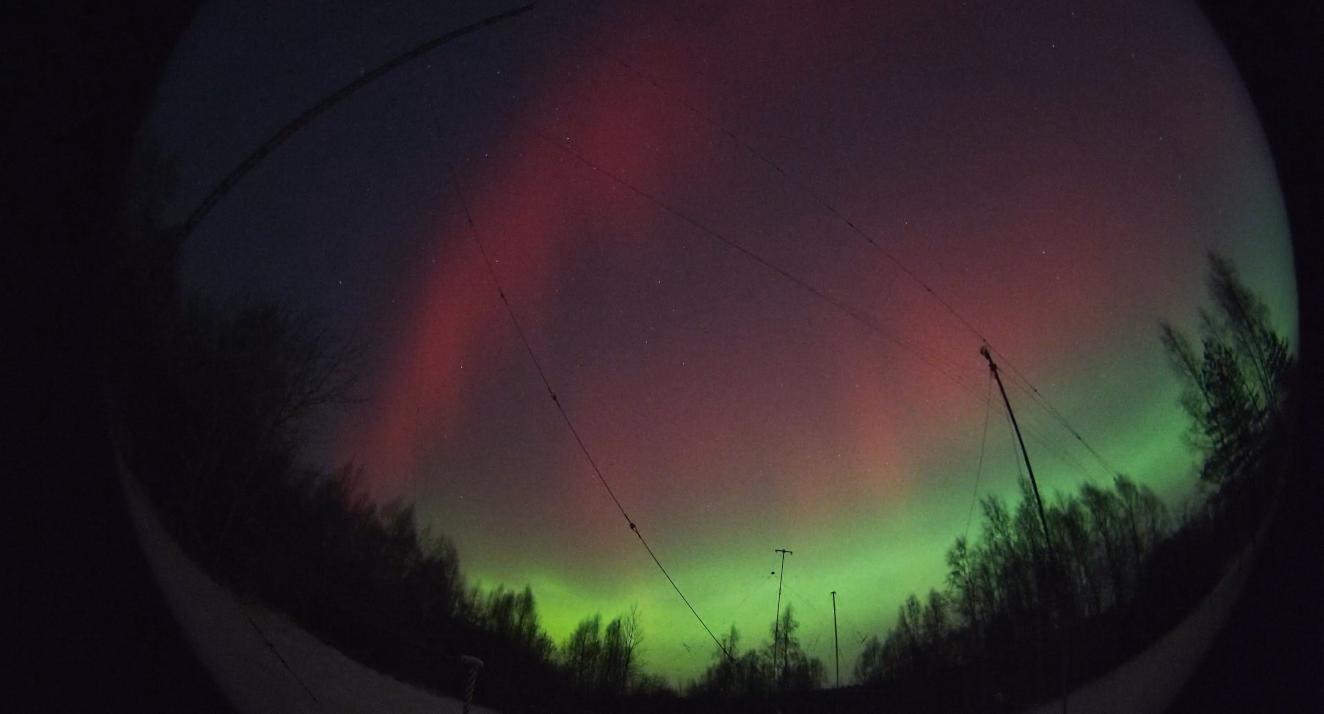
On the night from 19 to 20 January on the territory of the Kaliningrad region could be observed a rare for our latitude celestial phenomenon — the Aurora Borealis (the Northern Lights). The Northern Lights usually occurs in high latitudes for which they got their name, but that night the Earth was hit by a powerful geomagnetic storm class G4.7, caused strong auroras, visible even in the middle belt of Russia.
The last days in the Kaliningrad region the weather was frosty and clear, and the moon phase is at it’s minimum after the new moon on January 18, so the conditions for observing the aurora are optimal. The study of ionospheric processes and phenomena, including aurora, is carried out by the Kaliningrad branch of the N. V. Pushkov Institute of Terrestrial Magnetism, Ionosphere and Radiowave Propagation of the Russian Academy of Sciences (IZMIRAN) with whom the Astronomical Community of the IKBFU actively cooperates. Thanks to the automatic cameras of the Starvisor project, installed in the Kaliningrad Magnetic-Ionospheric Observatory in the Ulyanovka village, it was possible to capture the aurora in all it’s beauty.
The actual size of the STEVE is very impressive — at an altitude of 300-400 kilometers above the ground, a 25-30 kilometer wide band of heated gas can stretch for hundreds of kilometers.
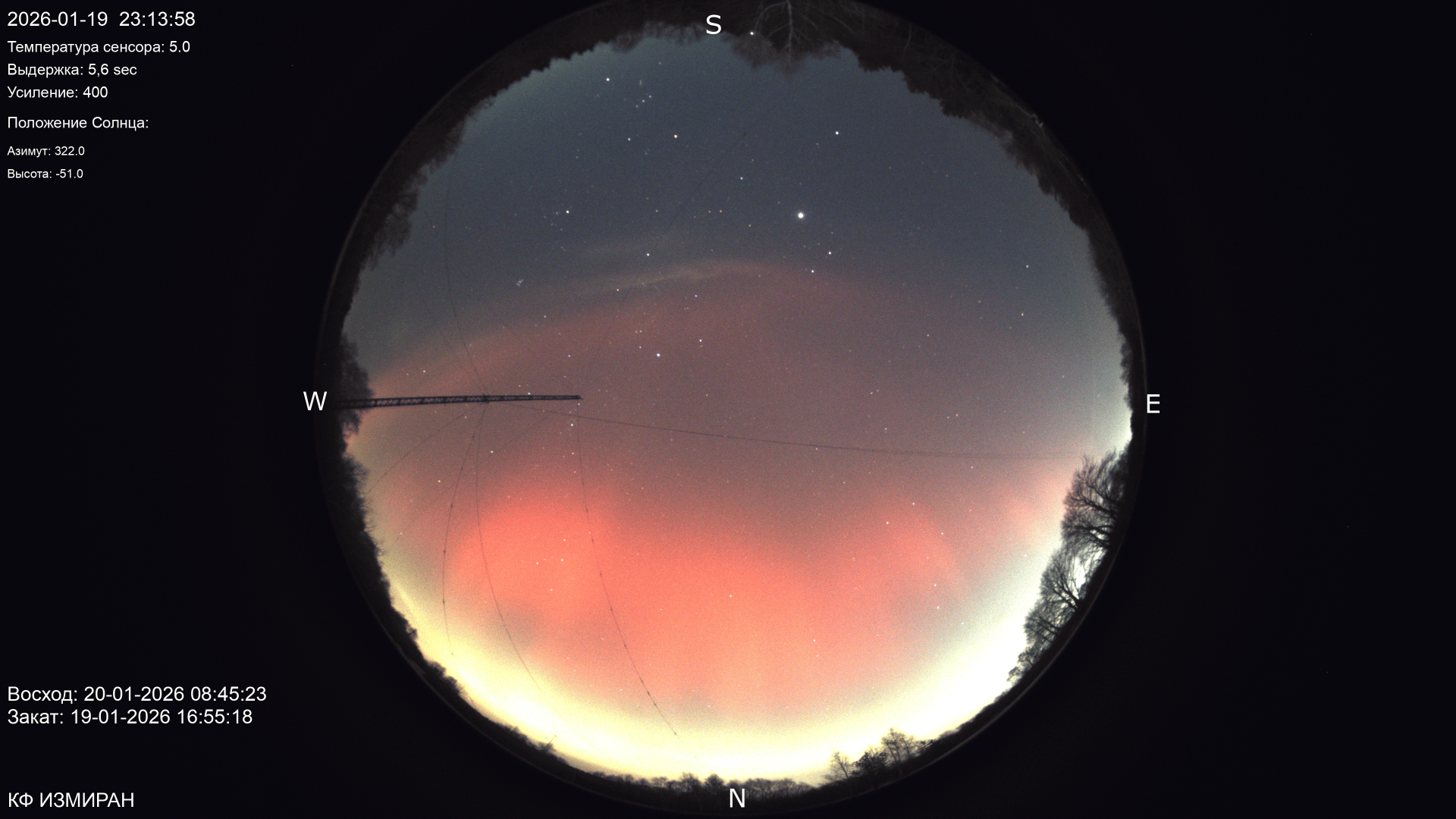
Members of the Astronomical Community of the IKBFU note that although the STEVE often accompany the Aurora Borealis, the physics of this phenomenon is noticeably different. If the auroras occur as a result of interaction between the magnetosphere of the Earth and charged particles of the solar wind, then the mechanism for the formation of STEVE is more complex. According to modern scientific ideas, they arise as a result of ionospheric physical-chemical reactions leading to the formation at high altitudes of relatively hot high-speed plasma. In the photos from the Kaliningrad Magnetic-Ionospheric Observatory, you can see the STEVE as a glow going into the southern part of the sky through the zenith.
At the same time, stable red aural arcs (SAR) — illumination of the upper ionosphere caused by the heating of electrons due to high geomagnetic activity were formed over the Kaliningrad region. Thus, during the maximum time of the geomagnetic storm over the Kaliningrad region managed to capture several unusual and rare celestial events.
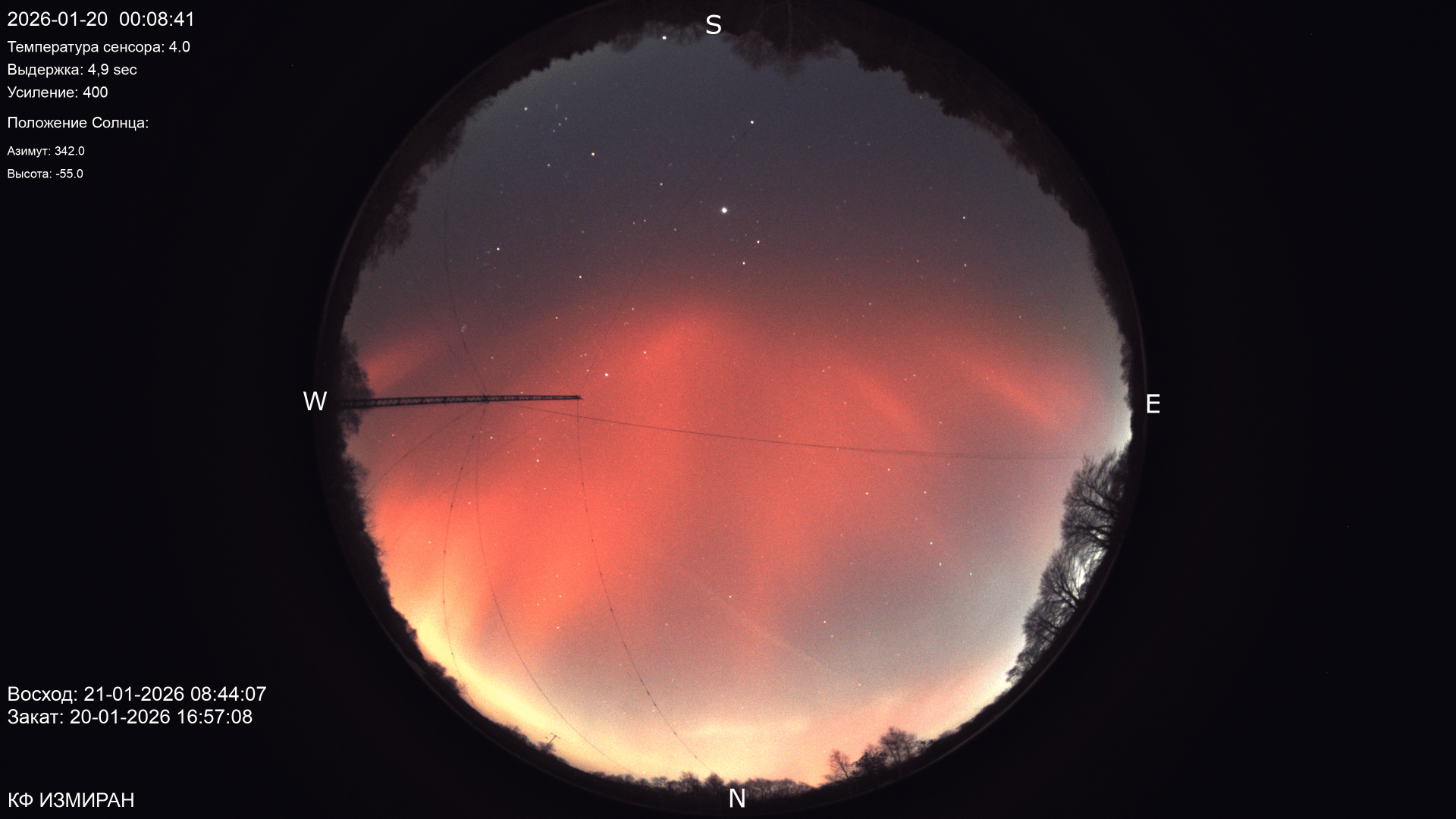
The astronomical community of IKBFU thanks the team of IZMIRAN, Kaliningrad Magnetic-Ionospheric Observatory and Starvisor project for their contributions and comments.


User profile for student
User profile for student
I give consent to the processing of the personal data provided, with Personal Data Processing Policy acquainted
Confirm consent